Fabric Fundamentals: Textures, Weaves, and Why They Matter
Discover how texture and weave shape fabric drape, breathability, and durability - so you can choose better garments, care smarter, and sew with confidence.
Why Fabric Fundamentals Matter — Fabric is the quiet architect of style, dictating how garments look, move, and last. Understanding texture, weave, and finish helps you read clothing beyond color and cut, revealing performance traits like drape, breathability, and durability. Designers rely on this knowledge to shape silhouettes; shoppers use it to predict comfort and care needs. A sleek satin face can telegraph elegance, while a matte twill suggests utility and ease. Weight and opacity control modesty and layering potential, while the interplay of fiber, yarn, and construction influences wrinkle resistance and shape retention. When you know how warp and weft form structure, or how a knit behaves under stress, you make smarter choices: a blazer that keeps its line, a dress that skims rather than clings, a tee that holds color and softness. Mastering these fundamentals refines your eye, extends wardrobe longevity, and elevates every outfit's feel and function.
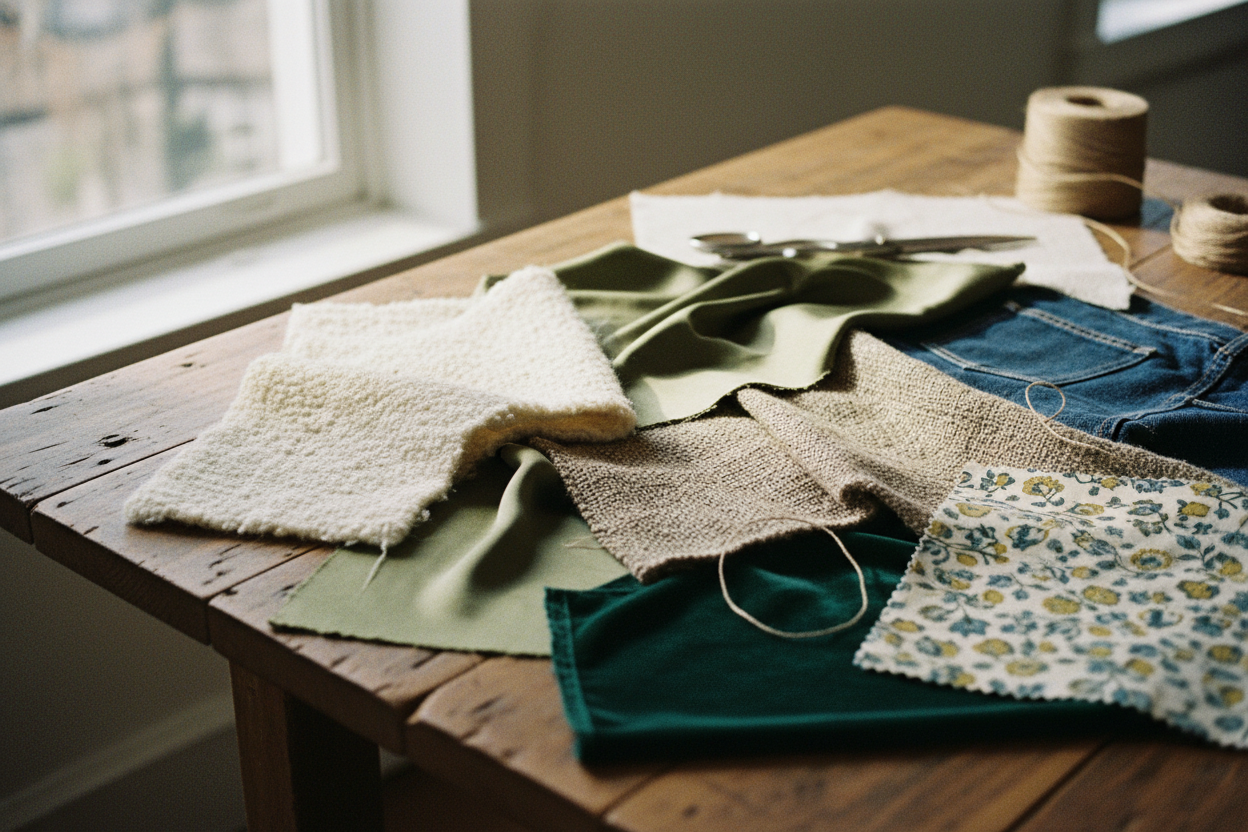
Decoding Texture and Handfeel — Texture is the tactile story a fabric tells, and handfeel is how your skin interprets it. Smooth surfaces glide; brushed ones feel warm and plush; slub yarns add organic irregularity; pile and nap create depth and light play. Luster can read refined, while matte surfaces temper shine for everyday wear. Texture influences friction, affecting how layers slide or catch and how garments hang over curves. Simple tests reveal a lot: scrunch the cloth to gauge wrinkle recovery, rub it lightly to estimate pilling risk, and hold it to the light to assess density and opacity. Finishing treatments like brushing, calendering, or enzyming can soften, smooth, or subtly sculpt the surface. Consider season and setting: airy crepe cools with gentle grain, while velvety piles cocoon. The right texture can add dimension to minimal outfits, mute bold prints, or make streamlined pieces feel inviting and touchable.
Weaves 101: Plain, Twill, Satin — Woven fabrics interlace warp (lengthwise) and weft (crosswise) yarns to create distinct personalities. A plain weave alternates over-under in a balanced grid, offering stability, breathability, and crispness ideal for shirts and simple skirts. Twill steps the interlacing to form diagonal ribs, boosting drape, resilience, and abrasion resistance—think relaxed trousers that move with you and resist scuffs. Satin uses longer floats for a liquid sheen and fluid movement, perfect for occasion pieces but more prone to snagging. Variations like basket weave, herringbone, and jacquard add texture or pattern at the loom, changing how a garment shapes and shines. Weave density and yarn twist further tune performance: tighter constructions guard against wind and wear; looser ones invite airflow. Knowing these structures helps you predict seam behavior, edge fray, and the level of tailoring support needed to achieve sharp lines or graceful flow.
Knits, Wovens, and Nonwovens — Knits are made of interlocking loops, granting natural stretch, recovery, and cushioned comfort. Jersey drapes softly and breathes, rib grips and flexes for trims or body-hugging pieces, and interlock adds stability with a smooth hand. Knits excel in tees, activewear, and travel basics where ease and movement matter. Wovens favor structure and shape retention, shining in tailoring, skirts, and garments that benefit from crisp edges. They resist vertical stretch but can be cut on the bias for fluidity. Nonwovens—like felt or bonded webs—offer dimensional texture or technical support, often used for accessories, interfacing, or unique surface effects. Understanding the family helps match fabric to function: knits for comfort and flexibility, wovens for precision and polish, nonwovens for stability or special effects. When sewing or styling, consider edge behavior—knit edges may curl, wovens may fray—and plan finishes that support the garment's look and longevity.
Comfort, Performance, and Wearability — Fabric performance drives real-world comfort. Breathability governs airflow and heat release; moisture management moves sweat from skin to surface; thermal regulation balances warmth without bulk. Construction matters: open weaves and lighter knits ventilate, while dense structures trap heat. Drape influences how fabric skims rather than clings, shaping confidence and silhouette. Mechanical stretch and added elastane affect flexibility, but recovery and support determine whether knees bag out or waistbands stay put. Surface friction impacts chafe and layerability; slick linings can transform structured pieces into easy wearers. Consider weight and thickness for seasonless versatility, and watch for static in dry conditions. Odor retention and dry time also affect daily rotation. By reading these cues—feel, bounce, airflow—you can build outfits that work from commute to evening, choosing textiles that keep skin comfortable, movement free, and proportions polished without constant adjustment.
Durability, Care, and Lifespan — A fabric's future is written in its structure. Look for abrasion resistance in high-contact zones, evaluate pilling tendency by rubbing surfaces, and check for snagging risks in float-heavy textures. Anticipate shrinkage and shape change by pre-washing or steaming a test swatch. Sensible routines preserve integrity: gentle cycles, cool water, and line drying reduce fiber stress; pressing with the right heat and steam maintains finish and crispness. Support structure where needed with quality interfacing and reinforce stress seams to prevent blowouts. Rotate wear to allow fibers to recover, and store garments with shoulder shape or careful folding to avoid creasing. Tackle maintenance early—de-pill sweaters, mend loose hems, and spot-clean stains before they set. Durability also means emotional longevity: colors that stay true, textures that age gracefully, and finishes that remain consistent. Prioritize construction and care to stretch cost-per-wear and keep favorites looking intentional, not exhausted.
Smart Selection: Matching Fabric to Purpose — Intentional choices start with lifestyle and climate. For movement-heavy days, pick knits with balanced recovery; for polish, choose wovens with supportive drape. To flatter silhouettes, pair fluid fabrics with flowing cuts and firm textiles with structured designs. Texture can guide styling: matte weaves downplay bold hues; subtle luster elevates neutrals. In-store, run quick tests: the scrunch test for wrinkles, the light test for opacity and density, the rub test for color transfer, and a gentle stretch-and-snap for recovery. Observe seam allowances and edge finish to predict fray and tailoring options. Swatch when possible to evaluate how fabric behaves with your existing pieces and under your typical lighting. Consider fiber blends that balance comfort with longevity, and choose finishes you can maintain. Build a wardrobe where each textile serves a role—workhorse pants, relaxed knits, statement textures—so every outfit feels intentional, comfortable, and enduring.